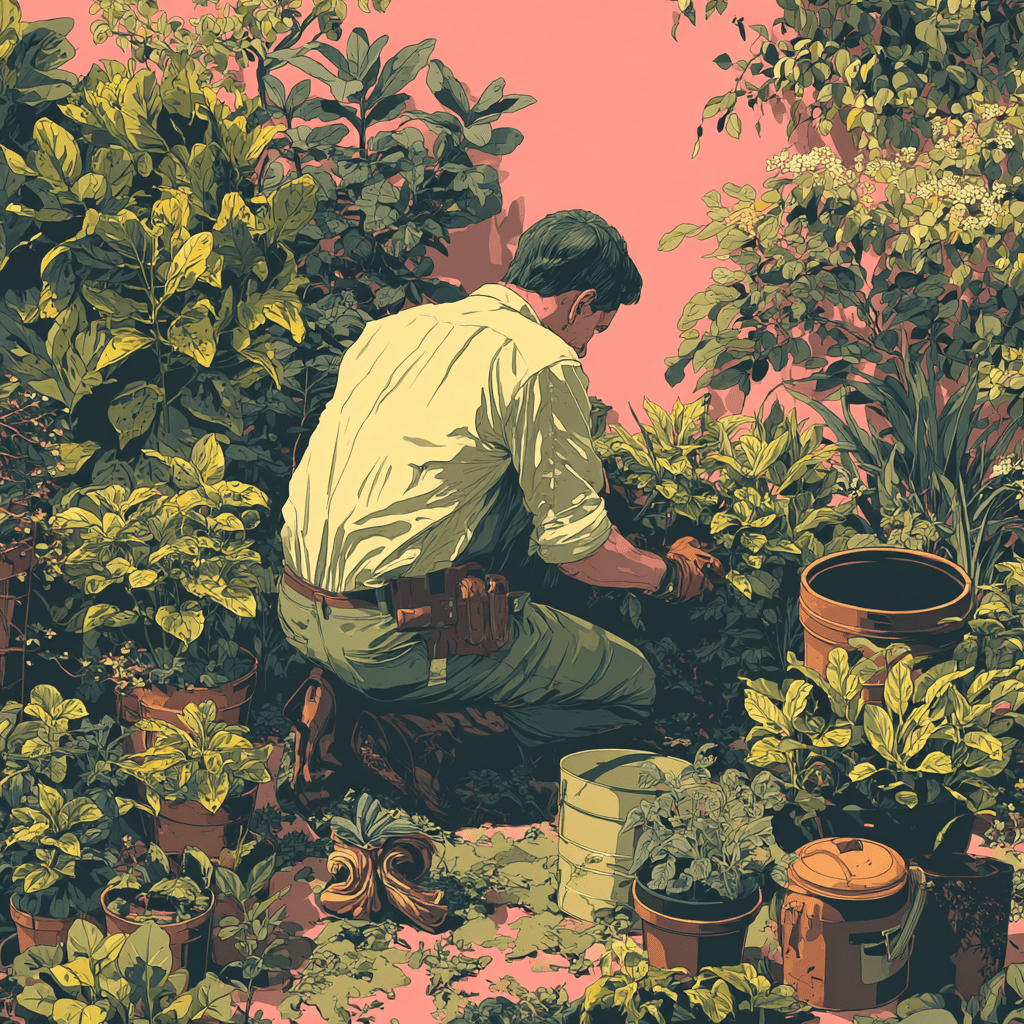
For so long, the image of a “good” garden has been one of crisp edges, weed-free borders, and perfectly manicured lawns. It’s an image that, for many of us, feels more like a source of stress than a sanctuary. We spend our weekends fighting nature—pulling, pruning, and polishing—only for it to burst forth again, seemingly undeterred. But what if we stopped fighting? What if, instead, we extended a hand of friendship to the beautiful chaos? This shift in perspective is where true freedom lies, and for those seeking inspiration on this gentler path, resources like gradina.space/en/ offer a welcoming space to explore a more natural, joyful approach to gardening. Let’s explore the profound peace and unexpected beauty that comes from making friends with the mess.
Rethinking Our Relationship With “Weeds”
 The first step toward befriending a wilder garden is to reconsider our vocabulary, starting with the word “weed.” What is a weed, really? It is simply a plant growing where we, with our human plans, didn’t intend it to. But from nature’s perspective, these so-called weeds are pioneers. They are the first responders, arriving to heal bare soil, prevent erosion, and provide instant habitat and food.
Imagine the humble dandelion pushing through a crack in the pavement. To a tidy gardener, it’s an enemy. To a wild gardener, it’s a hero. Its deep taproot breaks up compacted soil and draws up minerals other plants can’t reach. Its bright flowers offer one of the earliest sources of nectar for hungry bees emerging in spring. Its leaves are edible and nutritious, and its fluffy seed heads are a marvel of engineering.
When we stop seeing these plants as invaders and start seeing them as volunteers, our entire relationship with the garden changes. The feeling of constant battle is replaced by one of curiosity. You might find yourself observing which “weeds” appear where and what they might be telling you about your soil. This simple shift turns a chore into a fascinating conversation with the land.
The Freedom Of “Good Enough”
There is an immense, almost indescribable freedom in lowering your standards. This isn’t about giving up; it’s about letting go. Letting go of the pressure to have the tidiest yard on the street. Letting go of the guilt when you don’t deadhead every spent flower. Letting go of the idea that your garden needs to look like a magazine spread to be loved.
Adopting a “good enough” mindset frees up your weekends and, more importantly, frees your mind. Instead of a long list of chores, your time in the garden becomes an opportunity for exploration. You might sit with a cup of tea and simply watch the bees working the flowers you’ve allowed to bloom. You might notice the intricate geometry of a spider’s web stretched between two “overgrown” plants. You might feel the sun on your face without the pressure of a deadline.
This freedom extends to your plants as well. When you stop obsessive tidying, you allow for self-seeding. A beloved poppy might drop its seeds, and next year, you might be delighted to find its offspring popping up in a completely unexpected—and perfect—spot. The garden begins to design itself, with you as a gentle collaborator rather than a strict overseer.
Beauty In Decay And Dormancy
A wilder garden teaches us to find beauty in all seasons and all stages of life. In a perfectly manicured garden, the moment a flower fades, it is cut away. In a wilder garden, the faded flower head remains, and a new kind of beauty emerges.
Consider the structural elegance of a spent allium seed head, standing tall after its purple globe has faded. It catches the dew in the morning and the light of the setting sun, offering a sculptural quality that the fresh flower never could. Or think of ornamental grasses, which provide lush green movement all summer, then transform into towering sculptures of gold and tan that rustle softly through the winter, providing food and shelter for birds.
Leaving seed heads and standing perennials through the winter isn’t laziness; it is an act of generosity. It provides critical habitat for overwintering insects and a food source for birds when they need it most. Learning to appreciate this different kind of beauty—the stark lines of winter, the gentle decay of autumn—deepens our connection to the full cycle of life, not just its most vibrant moments.
Creating Intentional “Wild” Spaces
Embracing a wilder garden doesn’t mean letting everything go completely. It means creating intentional spaces where nature is invited to take the lead. This can be done in a way that feels deliberate and designed, blending the wild with the cultivated.
You might designate a corner of your yard as a “wild zone.” Perhaps it’s a patch behind the garage where you simply stop mowing and let the native grasses and wildflowers take over. You can edge it with a simple, defined border or a small path to show that this wildness is intentional—a feature, not an oversight.
Alternatively, you can weave wildness into your existing beds. Allow a few “volunteer” plants to stay if they please you. Leave a small pile of twigs and leaves in a quiet corner for hedgehogs or insects. Plant native species that are known for their ability to spread and create dense, wildlife-friendly thickets. These intentional choices create a beautiful tapestry where human design and natural processes coexist in joyful harmony.
The Wildlife Spectacle
The greatest reward for befriending the mess is the life it brings. A sterile, perfectly tidy garden is a quiet place. A wilder garden is a bustling metropolis of activity. As you provide more food, shelter, and nesting sites, the wildlife spectacle unfolds before your eyes.
You might be treated to the clumsy, endearing flight of a young bird taking its first lessons from a branch you didn’t prune. You might discover a family of toads living under a lush patch of hosta leaves, keeping your slug population in check. You might watch a praying mantis stalk its prey along the stem of a goldenrod. Your garden becomes less of a static picture and more of a living, breathing drama.
This influx of life is nature’s ultimate stamp of approval. It means your garden is functioning as part of a larger ecosystem. It means you have created a true sanctuary, not just for yourself, but for the countless creatures who share your space. And witnessing that life, up close and personal, is one of the deepest joys a gardener can know. So, let the grass grow a little longer, leave the leaves where they fall, and welcome the beautiful, life-giving mess. Your garden—and your soul—will be wilder and freer for it.